
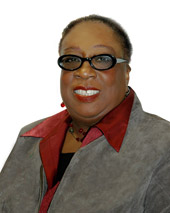
Margaret Gordon. Courtesy of http://www.pacinst.org
Be a good citizen and fight for the rights of decent, it might be the motto that you want to convey by this nice lady, Margaret Gordon.
As a resident of West Oakland, Margaret Gordon was used to living with pollution. Soot-spewing diesel trucks carrying goods to and from the port there routinely crisscrossed her neighborhood, or even worse, idled for long stretches on city streets. The area is dotted with industrial facilities, many of them older and more polluting. Like Gordon, who has asthma, many of the residents there live with respiratory problems. When three of her 10 grandchildren developed asthma, Gordon began to wonder if the environment was making her family sick.
Twelve years ago, at the age if 51, she became a volunteer with a neighborhood resident research project to measure “indicators” of well-being and quality of life, such as air quality, that could be tracked over time to see if the situation improves.
The neighborhood research project sought to turn residents into citizen-scientists, not use them as passive subjects. They came up with their own study questions and could use the data to advocate for change in their neighborhood.
That decision put Gordon on the path to become a community health advocate and researcher. She founded the West Oakland Environmental Indicators Project, training residents and youth to analyze their surroundings through a research lens. Over the years, Gordon has grown her reputation in the Bay Area as a passionate and effective community health advocate, who has the ability to bring diverse stakeholders together toward a common goal. Gordon is the first community resident appointed to the Port of Oakland commission, a powerful decision-making body that sets policies affecting thousands of residents. And now Gordon, 63, was just honored with a Purpose Prize, a prestigious award given to social innovators 60 and over, and will receive a $100,000 prize.
Two of the most “eye-opening” findings from the initial environmental indicators research project, Gordon said, were the following: In 1998, West Oakland had the highest level of toxic air releases of any neighborhood in the city, and children there were seven times more likely to be hospitalized for asthma than other children in the state.
Gordon says the data verified what residents were experiencing, but more importantly it gave the community ammunition to confront policymakers.
“With the knowledge of science, we could communicate on a technical level with them,” she said. “We weren’t in this place of [being uninformed] and saying, ‘What are you talking about?'”
The data showed that one of the biggest polluters in the neighborhood was the former Red Star Yeast facility. The factory was dumping 30,000 pounds of acetaldehyde, a possible carcinogen, into the surrounding area, according to Brian Beveridge, co-director of the West Oakland Environmental Indicator’s Project.
“[Emissions from the plant] were hard on people,” said Beveridge. “It’s an irritant for people who had a respiratory problem, and so many in West Oakland had asthma.”
He said neighbors had complained to the regional air quality officials, but the complaint process back then made it difficult to document the pollution. Beveridge said inspectors would be sent out after five complaints, but they weren’t always on the clock when the releases happened, sometimes during the night.
The factory had been around for decades, so its air permits were “grandfathered,” Beveridge said, allowing it to perform less stringent air quality standards. Gordon and community members pushed the company to upgrade their facility.
“We’re not anti-business,” said Gordon. “We’re trying to make the community healthier. So businesses that do harm to the community should go someplace else to do business or put technology in place where you’re not doing harm to the community.” Red Star Yeast shut down in 2003.
Since then, Gordon’s organization has worked with residents to tackle the issue of diesel truck pollution in West Oakland, where there are 10,000 truck trips per day. To get more fine-grain data about truck routes, the residents-turned-researchers staked out busy street intersections or freeway on- and off-ramps and counted the number of trucks that went by.
The organization used the truck-count data to develop a plan to re-route trucks away from places with many people or children, such as schools. The group spearheaded the city’s first truck route ordinance.
Beveridge described Gordon as “tireless” and a believer in self-education.
“The key to how I see Margaret teach, she often tells people, ‘you need to see it, lay your hands on it, see reality in context, and you can’t sit and expect someone to tell it all to you. You have to commit some time to your own self-education,’” he said.
Gordon makes a point of saying that she doesn’t have academic credentials. “I’ve never taken a biology class," she said, "but I’ve learned a lot of science in the last 12 years.”
A few years ago, Gordon was nominated for a public service award and received $10,000. She used the money to subsidize an internship at a community organization to improve her writing and advocacy skills.
“Someone else would have bought a new car," said Beveridge. "Margaret will find an education experience for herself."
“Margaret is an amazing advocate for the community, and she’s just really blossomed in this role,” said Meena Palaniappan of the Pacific Institute, which sponsors the indicators project. “It’s amazing the way she’s able to connect with actors on many different sides of the issue. As a member of the port commission, she interacts with people with a clear economic interest, and she’s able to verbalize and articulate the community perceptive in a compelling and convincing way.”
In January, the Port of Oakland implemented a state mandate to phase out older, more-polluting diesel trucks. Gordon’s presence on the board, Palaniappan says, ensured that the regulations were adopted in a way that benefits the communities who are most impacted by port pollution.
What’s the West Oakland Environmental Indicator’s Project’s next research question: “What’s in the air we breathe,” said Beveridge, who said the group is working with technology company Intel to test mobile devices that will allow residents to monitor air quality in real-time.
Beveridge says the goal is to compare the data they collect with that collected by the regional air quality agency, which takes air samples in towers located two-miles apart and hundreds of feet in the air.
“From that they tell us what the air in like in the air basin, so it’s always been an interest to know what do we really breathe,” said Beveridge. “Everybody breathes the same air, but there’s some local variation. Is it worse where we live.” He says the data they are collecting could reveal “pockets of pollution” that may arise if people are next to a factory, for example.
Residents plan to meet with regional air quality officials to share their findings, and push for changes.
“As long as we don’t have public education, we’ll always have disproportionate impacts on how policy is going to be formed,” Gordon said. “It is important for those who have the sophisticated capacity and resources to come back to the most vulnerable communities and…support what they are doing.”
“I’m just working and doing my job to leave other people with the same kind of education.”
Read More......
Twelve years ago, at the age if 51, she became a volunteer with a neighborhood resident research project to measure “indicators” of well-being and quality of life, such as air quality, that could be tracked over time to see if the situation improves.
The neighborhood research project sought to turn residents into citizen-scientists, not use them as passive subjects. They came up with their own study questions and could use the data to advocate for change in their neighborhood.
That decision put Gordon on the path to become a community health advocate and researcher. She founded the West Oakland Environmental Indicators Project, training residents and youth to analyze their surroundings through a research lens. Over the years, Gordon has grown her reputation in the Bay Area as a passionate and effective community health advocate, who has the ability to bring diverse stakeholders together toward a common goal. Gordon is the first community resident appointed to the Port of Oakland commission, a powerful decision-making body that sets policies affecting thousands of residents. And now Gordon, 63, was just honored with a Purpose Prize, a prestigious award given to social innovators 60 and over, and will receive a $100,000 prize.
Two of the most “eye-opening” findings from the initial environmental indicators research project, Gordon said, were the following: In 1998, West Oakland had the highest level of toxic air releases of any neighborhood in the city, and children there were seven times more likely to be hospitalized for asthma than other children in the state.
Gordon says the data verified what residents were experiencing, but more importantly it gave the community ammunition to confront policymakers.
“With the knowledge of science, we could communicate on a technical level with them,” she said. “We weren’t in this place of [being uninformed] and saying, ‘What are you talking about?'”
The data showed that one of the biggest polluters in the neighborhood was the former Red Star Yeast facility. The factory was dumping 30,000 pounds of acetaldehyde, a possible carcinogen, into the surrounding area, according to Brian Beveridge, co-director of the West Oakland Environmental Indicator’s Project.
“[Emissions from the plant] were hard on people,” said Beveridge. “It’s an irritant for people who had a respiratory problem, and so many in West Oakland had asthma.”
He said neighbors had complained to the regional air quality officials, but the complaint process back then made it difficult to document the pollution. Beveridge said inspectors would be sent out after five complaints, but they weren’t always on the clock when the releases happened, sometimes during the night.
The factory had been around for decades, so its air permits were “grandfathered,” Beveridge said, allowing it to perform less stringent air quality standards. Gordon and community members pushed the company to upgrade their facility.
“We’re not anti-business,” said Gordon. “We’re trying to make the community healthier. So businesses that do harm to the community should go someplace else to do business or put technology in place where you’re not doing harm to the community.” Red Star Yeast shut down in 2003.
Since then, Gordon’s organization has worked with residents to tackle the issue of diesel truck pollution in West Oakland, where there are 10,000 truck trips per day. To get more fine-grain data about truck routes, the residents-turned-researchers staked out busy street intersections or freeway on- and off-ramps and counted the number of trucks that went by.
The organization used the truck-count data to develop a plan to re-route trucks away from places with many people or children, such as schools. The group spearheaded the city’s first truck route ordinance.
Beveridge described Gordon as “tireless” and a believer in self-education.
“The key to how I see Margaret teach, she often tells people, ‘you need to see it, lay your hands on it, see reality in context, and you can’t sit and expect someone to tell it all to you. You have to commit some time to your own self-education,’” he said.
Gordon makes a point of saying that she doesn’t have academic credentials. “I’ve never taken a biology class," she said, "but I’ve learned a lot of science in the last 12 years.”
A few years ago, Gordon was nominated for a public service award and received $10,000. She used the money to subsidize an internship at a community organization to improve her writing and advocacy skills.
“Someone else would have bought a new car," said Beveridge. "Margaret will find an education experience for herself."
“Margaret is an amazing advocate for the community, and she’s just really blossomed in this role,” said Meena Palaniappan of the Pacific Institute, which sponsors the indicators project. “It’s amazing the way she’s able to connect with actors on many different sides of the issue. As a member of the port commission, she interacts with people with a clear economic interest, and she’s able to verbalize and articulate the community perceptive in a compelling and convincing way.”
In January, the Port of Oakland implemented a state mandate to phase out older, more-polluting diesel trucks. Gordon’s presence on the board, Palaniappan says, ensured that the regulations were adopted in a way that benefits the communities who are most impacted by port pollution.
What’s the West Oakland Environmental Indicator’s Project’s next research question: “What’s in the air we breathe,” said Beveridge, who said the group is working with technology company Intel to test mobile devices that will allow residents to monitor air quality in real-time.
Beveridge says the goal is to compare the data they collect with that collected by the regional air quality agency, which takes air samples in towers located two-miles apart and hundreds of feet in the air.
“From that they tell us what the air in like in the air basin, so it’s always been an interest to know what do we really breathe,” said Beveridge. “Everybody breathes the same air, but there’s some local variation. Is it worse where we live.” He says the data they are collecting could reveal “pockets of pollution” that may arise if people are next to a factory, for example.
Residents plan to meet with regional air quality officials to share their findings, and push for changes.
“As long as we don’t have public education, we’ll always have disproportionate impacts on how policy is going to be formed,” Gordon said. “It is important for those who have the sophisticated capacity and resources to come back to the most vulnerable communities and…support what they are doing.”
“I’m just working and doing my job to leave other people with the same kind of education.”
